Why B2B Websites Get Traffic but No Meetings
Traffic is not your problem. Conversion is.
Quick Answer
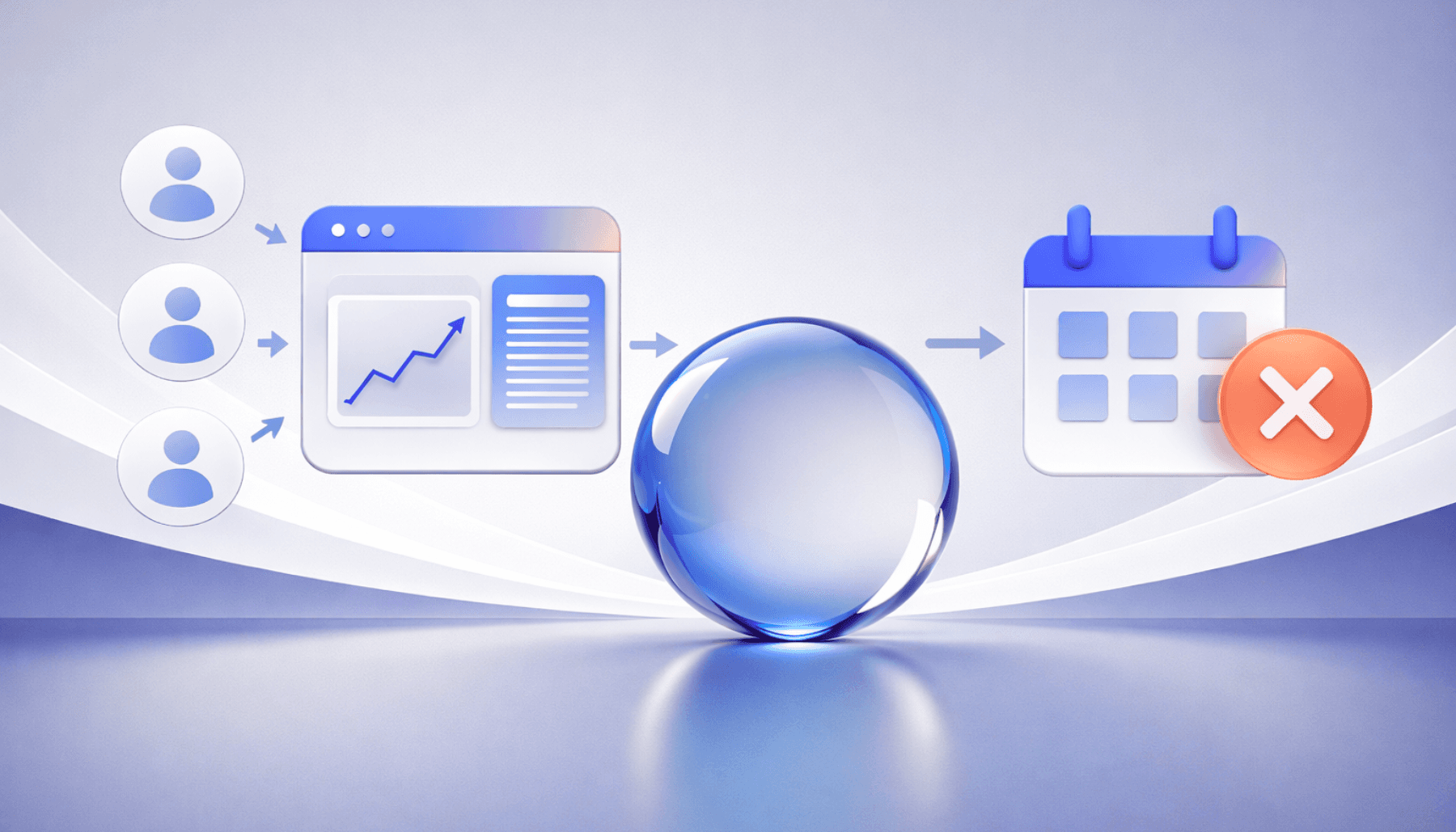
B2B websites get traffic but no meetings because they fail to guide visitors toward a clear decision. Most websites lack positioning clarity, structured user flow, and strong conversion triggers, causing high-intent visitors to leave without taking action.
Key Takeaways
Traffic without conversion is a structural issue.
Most websites fail at clarity, not design.
Visitors scan, they do not explore.
Conversion depends on messaging and flow.
Booking friction silently kills pipeline.
The Illusion of Progress
Traffic feels like progress.
You see numbers going up in analytics. More visitors, more sessions, more page views.
It creates a sense that growth is happening.
But when you look at your calendar, nothing has changed.
No increase in booked calls. No improvement in pipeline.
This disconnect is one of the most common frustrations in B2B.
Because the assumption is simple.
If people are visiting, some of them should convert.
But that assumption is wrong.
Traffic does not convert.
Clarity does.
What Actually Happens When Someone Visits Your Website
Most founders imagine a user journey that looks like this.
A visitor lands on the homepage, reads through the content, explores a few sections, builds trust, and then books a call.
That is not what happens.
In reality, users scan your website for a few seconds.
They look for signals.
Is this relevant to me?
Do they understand my problem?
Is this worth my time?
If those answers are not immediately clear, they leave.
Not because they are not interested.
But because they are not convinced.
Why High Traffic Still Leads to Zero Meetings
There are a few structural reasons why this happens.
Not surface-level issues, but deeper problems in how the website is designed.
1. The Website Tries to Say Too Much
Most B2B websites try to explain everything.
Features, services, industries, processes.
The intention is good.
But the outcome is confusion.
When everything is said, nothing is understood.
Visitors cannot quickly identify what matters to them.
So they leave.
2. No Clear “Who This Is For”
If your website speaks to everyone, it resonates with no one.
Visitors need to feel like the message is written specifically for them.
Without that, even interested users hesitate.
Because they are not sure if the solution actually fits their situation.
3. Weak or Generic CTAs
This is one of the most common conversion leaks.
Buttons like “Learn More” or “Get Started” do not create action.
They do not tell the user what will happen next or why it matters.
So even if interest exists, it does not convert into intent.
4. Hidden or Friction-Heavy Booking Flow
Even when someone is ready to book a call, the process often creates friction.
Long forms. Slow loading pages. Multiple steps.
Every extra step reduces conversion.
This is where many companies silently lose high-intent leads.
What High-Converting Websites Do Differently
The difference is not dramatic.
It is structural.
High-converting websites are designed around decisions, not information.
Here is what they consistently get right:
Immediate relevance
The user knows within seconds if this is for them
Problem-first messaging
The focus is on what the user is struggling with
Clear next step
The CTA is obvious and easy to act on
Minimal friction
Booking or contact is simple and fast
Consistent narrative
Every section reinforces the same core message
The Tools That Help You Fix Conversion
Once you start treating your website as a system, execution becomes measurable and improvable.
Platforms like Framer or Webflow allow teams to quickly update and test website structure without heavy development cycles
Hotjar helps you understand real user behavior through heatmaps and session recordings. This reveals where users drop off and what confuses them
Booking tools like Cal.com reduce friction in scheduling. Instead of long forms or back-and-forth emails, users can instantly book a meeting
The goal is not just to build a website.
It is to continuously improve how it converts.
The Hidden Killer: Booking Friction
This is one of the most overlooked issues.
Even when your messaging is strong and your traffic is relevant, conversion can fail at the final step.
If booking a call feels like effort, users drop off.
This includes:
Asking for too much information upfront
Delayed response after form submission
No clear scheduling option
Complex or broken booking flows
Reducing this friction can significantly improve conversion without increasing traffic.
If your website is getting traffic but no meetings, you do not need more visitors. You need a better conversion system.

How to Diagnose Your Website in 15 Minutes
You do not need a full audit to identify major issues.
Here is a simple way to evaluate your website quickly:
Open your homepage as a new visitor
Ask yourself if it is immediately clear who this is for
Read only the first screen
Does it clearly explain the problem and value?
Find the primary CTA
Is it obvious and compelling?
Try booking a call
Count how many steps it takes
Check user behavior
Use tools like Hotjar to see where users drop
If any of these steps feel unclear or slow, you have found your conversion leaks.
Why This Problem Keeps Repeating
Many companies redesign their website but see no improvement.
This happens because they focus on visuals instead of structure.
They change layouts, colors, and animations.
But they do not fix positioning, messaging, or flow.
So the underlying problem remains.
Conversion does not improve because the system has not changed.
Quick Summary for Founders
Traffic does not guarantee pipeline.
Your website must guide visitors toward a decision.
Most B2B websites fail because they prioritize information over clarity.
Fixing conversion is not about design.
It is about structure, messaging, and reducing friction.
FAQs
Why is my website getting traffic but no leads?
Does more traffic improve conversion?
What is the most important part of a website?
How can I improve website conversion quickly?
What tool should I use for booking calls?
Your website should not just attract visitors. It should convert them into conversations. If you want your traffic to turn into real pipeline,