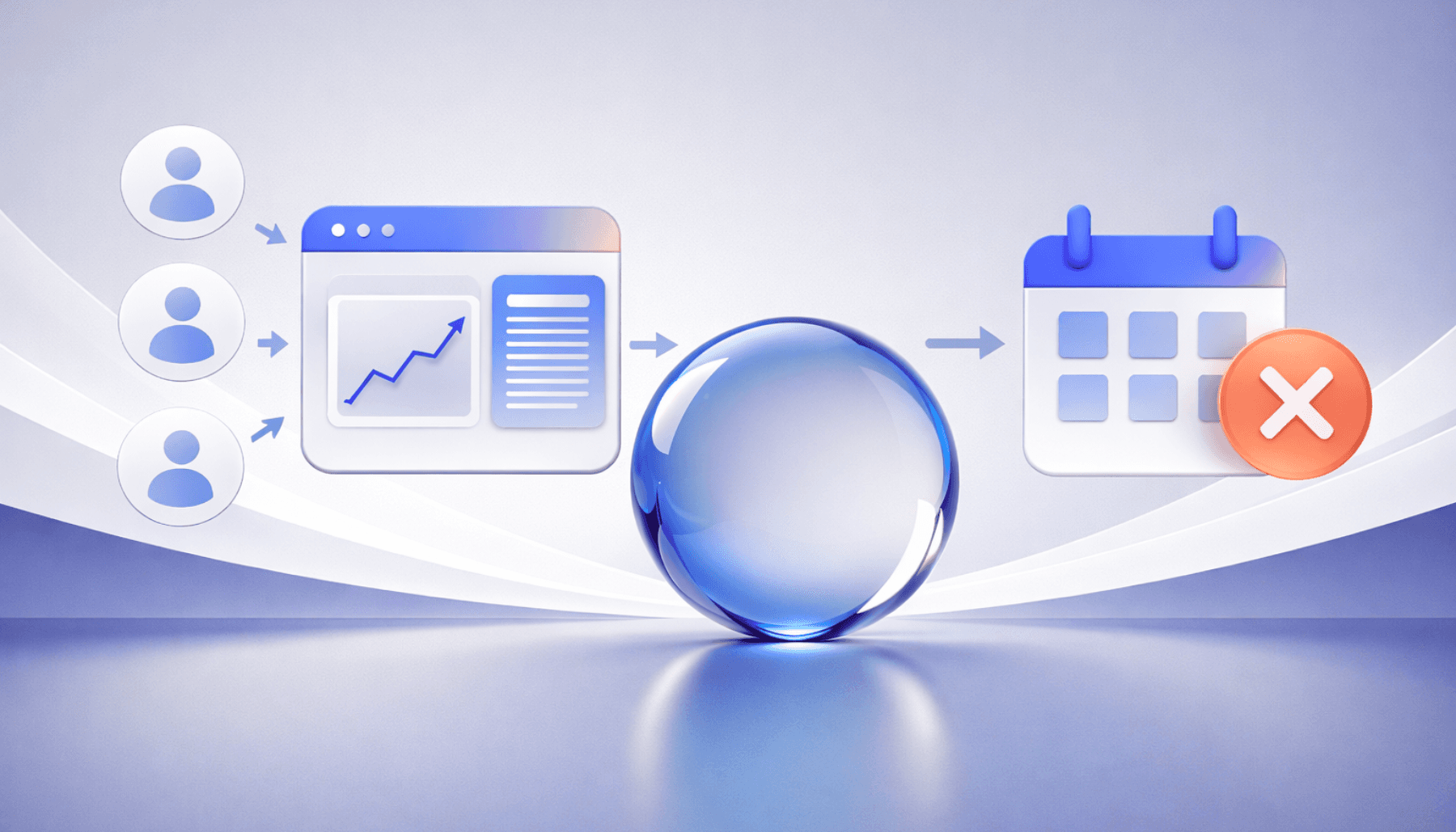
How B2B Companies Build Predictable Pipeline
Predictable pipeline is not created by doing more. It is created by designing how demand flows through your business.

Quick Answer
B2B companies build predictable pipeline by aligning targeting, outbound, inbound, and conversion into a structured system. Instead of relying on sporadic campaigns, they create continuous workflows that consistently generate and convert high-intent demand.
Key Takeaways
Predictable pipeline is a system, not a result.
Consistency comes from workflows, not campaigns.
Outbound, inbound, and conversion must work together.
Targeting and qualification define pipeline quality.
Infrastructure enables repeatability.
Why Most B2B Pipeline Feels Random
For most companies, pipeline feels like something that happens to them.
Some weeks are strong. Meetings get booked, deals move forward, and the team feels momentum.
Then everything slows down.
No clear reason. No clear pattern.
This creates a reactive cycle.
Teams try to fix it by increasing activity. More outreach. More content. More experiments.
But the underlying issue remains.
There is no system controlling how demand is created, qualified, and converted.
So pipeline behaves exactly as expected.
Unpredictable.
What Predictable Pipeline Actually Means
Predictable pipeline does not mean constant volume.
It means consistency in how pipeline is generated.
You know how many conversations you can create in a week. You understand how those conversations convert. You can estimate outcomes based on input.
This is not guesswork.
It is the result of a structured system.
Most companies never reach this stage because they rely on effort instead of design.
The System Behind Predictable Pipeline
At its core, predictable pipeline is built on three connected layers.
1. Targeting Layer
Everything starts with clarity on who you are trying to reach.
This is where most systems fail.
If your ICP is too broad, everything downstream weakens. Messaging becomes generic. Outreach loses relevance. Conversion drops.
Strong systems start with narrow, well-defined targeting.
2. Demand Generation Layer
This is where pipeline enters the system.
It includes outbound and inbound working together.
Outbound creates immediate demand by reaching out to specific prospects.
Inbound builds long-term demand by attracting people already searching for solutions.
The key is alignment.
Both should target the same audience with the same core message.
3. Conversion Layer
This is where demand turns into pipeline.
Your website, messaging, and qualification process determine whether interest becomes a real opportunity.
Without a strong conversion layer, even high-quality demand is wasted.
What This Looks Like Operationally
This is where predictable pipeline becomes real.
It is not about theory. It is about how the system runs every day.
Outbound is not done in bursts. It runs continuously with structured lead sourcing, enrichment, and outreach.
Inbound is not random. It focuses on high-intent topics that align with your ICP.
The website is not static. It is optimized to convert and evolves based on user behavior.
All three layers feed into each other.
Execution requires infrastructure.
Apollo is typically used to build highly targeted lead lists based on ICP filters and intent signals
ReachInbox helps manage outreach sequences, ensuring consistent sending and follow-ups
Zapmail supports scaling outbound infrastructure while maintaining deliverability
These tools enable the system to run continuously.
Without them, execution becomes inconsistent.
The Pipeline Math Most Teams Ignore
One of the biggest advantages of a structured system is visibility.
You start understanding how inputs translate into outputs.
For example:
Number of leads sourced
Messages sent
Replies received
Meetings booked
Deals closed
When this flow is consistent, you can identify bottlenecks.
If replies are low, messaging needs improvement.
If meetings are low, qualification may be weak.
If deals are low, conversion or sales process may be the issue.
This is how predictable pipeline is built.
Not by guessing, but by understanding the system.
Where Most Companies Break
Even when the system is understood, execution often fails.
Here are the most common breakdown points:
Inconsistent execution
Outreach starts and stops instead of running continuously
Misaligned messaging
Different channels communicate different value propositions
Weak qualification
Teams pursue leads that are not a good fit
No feedback loop
Data is collected but not used to improve the system
Over-reliance on one channel
Depending only on outbound or inbound creates instability
If your pipeline feels unpredictable, the issue is not effort. It is your system.

What High-Performing B2B Teams Do Differently
The difference is not in how much they do.
It is in how they operate.
They define a clear ICP and build everything around it.
They run outbound consistently instead of in bursts.
They treat inbound as a long-term asset, not a short-term tactic.
They continuously refine messaging based on real conversations.
Most importantly, they measure everything.
This allows them to improve the system over time.
A Practical Way to Start
If you want to build predictable pipeline, start with clarity.
Define your ICP and core message.
Then build a simple outbound system.
Focus on consistency over volume.
In parallel, start creating inbound content aligned with your audience.
Improve your conversion layer to ensure leads are not lost.
Do not try to scale everything at once.
Build the system first. Then scale it.
Quick Summary for Founders
Predictable pipeline is not created by doing more.
It is created by building a system where targeting, demand generation, and conversion work together.
Companies that rely on effort struggle with inconsistency.
Companies that build systems create stability.
FAQs
What is predictable pipeline in B2B?
How do companies build predictable pipeline?
Why is my pipeline inconsistent?
Which channel is best for pipeline?
How long does it take to build predictable pipeline?
Pipeline should not feel random. It should feel engineered. If you want consistent, scalable growth,